
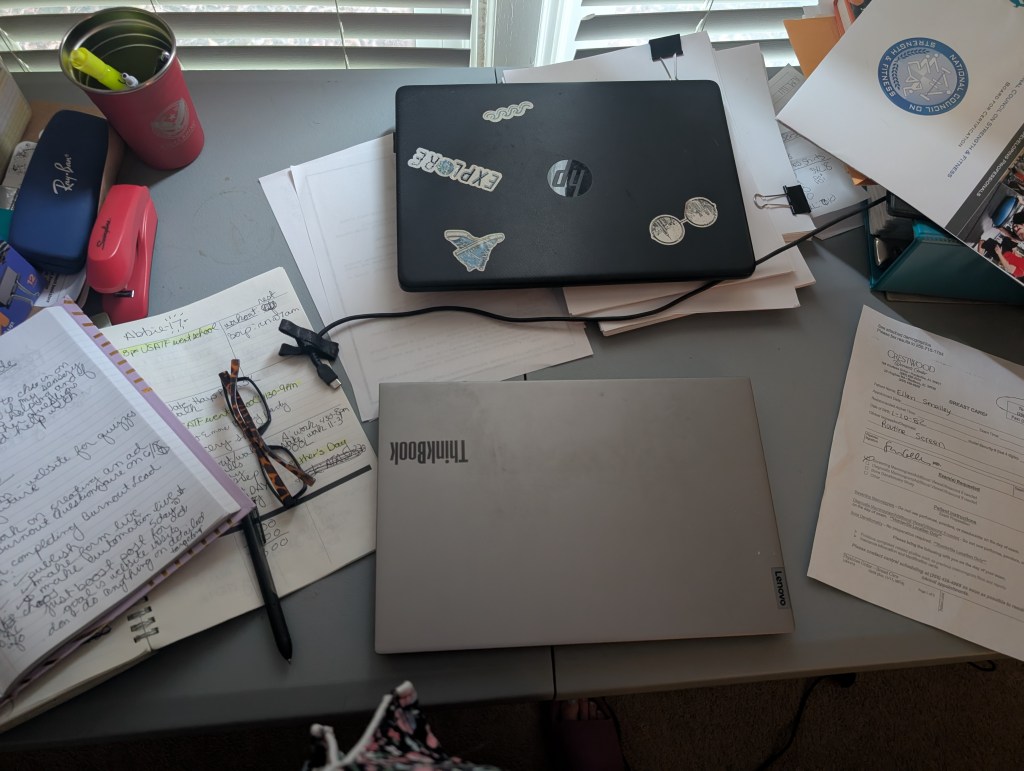
I can feel it like clockwork-around 7 weeks into a new quarter of the school year, I start feeling exhausted. Not just tired, but I wake up tired. My workouts are terrible. I’m yawning throughout the day. I am actively willing my legs to take one step at a time. This always hits when I’m 1.5-2 weeks away from a week-long break, but I’m not quite there yet, so I have to continue my same routine.
This type of exhaustion is typical when you are overwhelmed, burned out, or the masking of your neurodivergence has become your full-time job. While we would love nothing more than to take a break and hit pause on all responsibilities, that’s not always possible. So what is a happy medium to take care of yourself when you still have responsibilities to take care of?
Whether you are just in a busy season or are recovering from burnout, this post is going to give you some low-energy suggestions to help you make it to that finish line when you are able to adequately rest and recover.
Why Traditional Routines Fall Apart When You’re Exhausted
Your brain and nervous system are already overloaded
Mental load matters. When your brain and nervous system are already over capacity, you are exhausted, yet, you keep trying to add more.
Executive function requires energy
Have you ever wanted to scream when someone asks you what’s for dinner? Decision fatigue is absolutely real. Task initiation, decision-making, long-term planning and more are executive function skills and when you are burned out, these can require a seemingly huge amount of energy.
The perfectionism trap: all-or-nothing thinking
Key point: The problem isn’t lack of discipline—it’s that the routine demands more resources than are currently available. When you can change your thinking from “perfect” to “good is good enough”, even if it’s temporary, you can conserve energy.
What Makes a Routine Work on Low-Energy Days?
Simplicity over optimization
I’m a huge believer in taking micro steps, meaning you break a task into tiny, tiny steps in order to get it accomplished. For instance, in order to address the huge pile of mail that has been accumulating, I set a timer for 10 minutes to sort and shred. It’s a lot easier to work for 10 minutes at a time versus the hour it would likely take me to complete the whole pile.
Reducing decisions and mental load
This is a huge one. When you are already low on energy, you want to decrease the amount of additional thinking you will need to do. Try to plan ahead and reduce decisions for pick up logistics for school/after school activities, and utilize a written system to keep up with a To-Do list. Taking those little things out of your brain will help.
Focusing on consistency rather than intensity
Your routine should be used the majority of the time. If it’s intense or complicated, you won’t want to use it.
Making the routine easy enough to do on your worst days
Key point: A routine only works if it still works when life gets hard.
The “Minimum Effective Dose” Approach to Self-Care
Again, we are going to use micro steps to get things done:
- Movement that takes less than five minutes-no one ever said that you had to do 30+ minutes of exercise at the same time. Break it into smaller chunks and use movement breaks throughout the day.
- Nutrition shortcuts that support your brain-don’t like the idea of meal prepping? Try washing and prepping healthy ingredients so you have options at meal time for variety.
- Sleep-supportive habits with minimal effort-sleep is key for lowering stress and staying healthy. Make sure that your bedroom is dark, cool, and comfortable to allow you 7-9 hours of sleep whenever possible.
- Tiny nervous system regulation practices-short on time? Try a 3-5 minute mindfulness exercise, or even just sitting in a quiet room before you transition to a high-energy task. These practices will help you recharge your mental battery.
Key point: Small actions done consistently create more stability than ambitious plans done occasionally.
Low-Energy Routines for Common Struggles
These routines are especially important when:
- When you’re mentally overwhelmed
- When you’re physically exhausted
- When you’re experiencing ADHD paralysis
- When you’re caregiving and have no time for yourself
Examples of Low-Energy Routines That Actually Work
A 5-minute morning routine
While you are brewing your coffee, take 5 minutes to work on mindful breathing. Use deep breaths while you notice the sights, smells, and sounds around you.
A “good enough” workday reset
With three kids, I recruited them at an early age to help me with this. When they entered Kindergarten, they were responsible for making their own lunches for the next day. Were they perfect? No. Did I teach them responsibility and off-load tasks? Yes. I also picked out school outfits the night before and now, everyone is responsible for finding and packing any sports practice essentials the night before. My focus is to make our mornings as smooth as possible because they are very stressful.
An evening routine that doesn’t require motivation
I off-load a good bit of this to my husband. I may cook dinner, but he handles the dishes, which often means also emptying and reloading the dishwasher. Since I meal prep, all I need to do is throw pre-portioned items into my lunch box for the next day and then I’m done.
A recovery-day routine for burnout periods
Since my workouts are usually sluggish during this time, I focus on “I’m up and I’m doing something active” during these times, versus maxing out reps or pushing myself during runs. For example, I’m more likely to walk instead of run and I pick short workouts that don’t include any exercises that I would use as an excuse not to go to the gym. This is not the time for burpees by any stretch. Anything to make it easier to move the needle towards exercising is my goal. And sometimes, an extra day of rest is also necessary. The key is to listen to your body, not push through despite the signals it’s sending you.
How to Build Your Own Low-Energy Routine
- Start with your biggest pain point
- Remove unnecessary steps
- Create visual reminders and environmental supports
- Test and adjust instead of judging yourself
Signs Your Routine Is Too Demanding
- You frequently avoid it-it doesn’t work if you don’t use it.
- Missing one day causes you to quit-remember, progress over perfection will always win
- It creates stress instead of reducing it
- You only succeed when conditions are perfect
The Goal Isn’t Productivity—It’s Capacity
This is a form of triage-you want to focus on taking care of yourself during these stressful seasons, not just boost or maintain productivity. This requires:
- Building trust with yourself again
- Creating stability during stressful seasons
- Supporting your nervous system instead of fighting it
Conclusion
You do not need a perfect routine to improve your health and well-being. Sustainable routines are designed for real life, not ideal circumstances. The best routine is the one you can still follow when you’re tired, overwhelmed, and running low on energy.
Worried that you’re heading towards burnout? I’ve created a FREE 3-minute quiz to help you determine the areas where you are currently struggling. Click this link, take the quiz, and I will send you PERSONALIZED suggestions within 24 hours.


Leave a Reply