
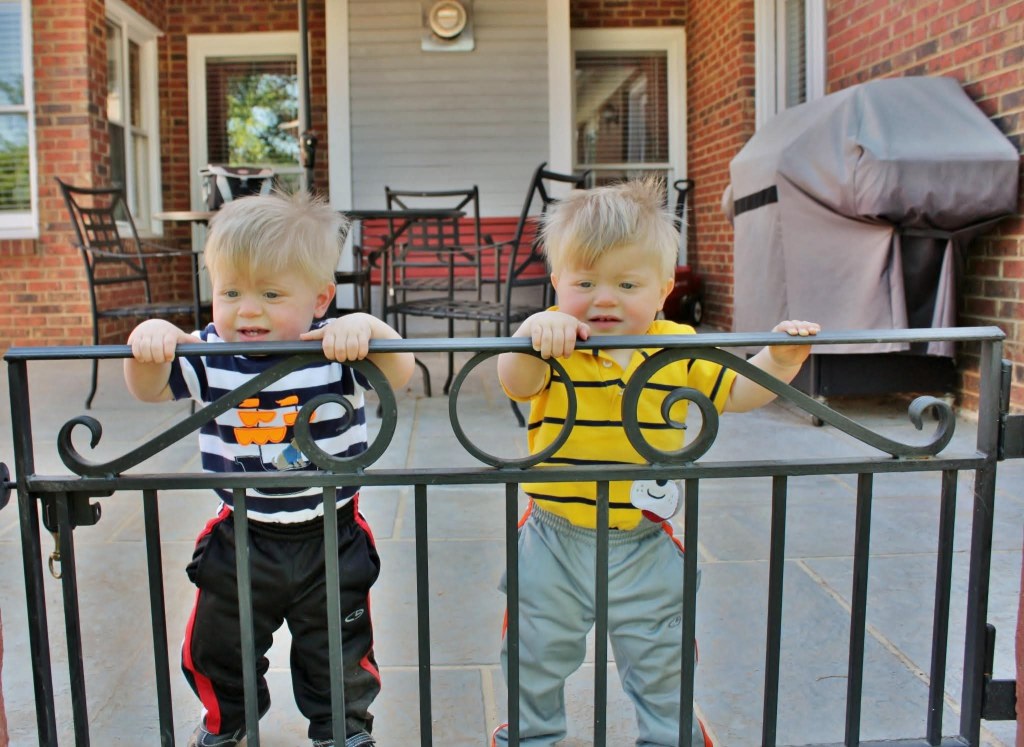
When my twins were infants, they followed us everywhere. My husband allowed himself to be trapped and entertained them for hours (a mistake that haunted him until they were at least 13 years old). I tried to be a moving target, still getting chores done, but had babies crawling, and eventually walking/running, after me. One of them in particular was also notorious for asking the same question repeatedly, even as the answer was coming out of our mouths. In addition to the twins, we also have a daughter who is 22 months older than them. Because she has severe anxiety, she also followed us around, afraid that we would leave her if she didn’t see us.
I bring these anecdotes up because it is quite common for neurodivergent children to struggle with boundaries. Looking back, I wish I could see what was really going on (3 kids, undiagnosed ADHD, plus two with anxiety). This article is what I wish I knew when my children were very young. I knew they weren’t trying to be disrespectful, but this was definitely an instance where neurotypical advice did not cut it at all. If you are looking for affirming ways to teach your children the importance of boundaries without shaming, then read on.
Why Boundaries Can Be Difficult for Neurodivergent Kids
Giving space and “reading the room” are difficult concepts for neurodivergent kids for a variety of reasons:
- Differences in social communication-especially putting themselves in someone else’s shoes
- Executive functioning challenges
- Hyperfocus on people or interests
- Difficulty reading body language or subtle social cues
- Anxiety and reassurance seeking
- Emotional regulation challenges
- Sensory differences affecting awareness of personal space
Again, neurodivergent kids are not trying to be disrespectful; rather, they can’t always see that the other person needs space or a break.
What “Giving Someone Space” Actually Means
Quite often, ND children hear a phrase like “give them space”, but they don’t actually know what that means. It’s very important to be explicit when you are introducing concepts to them. Giving examples can be extremely helpful. Giving someone space can look like:
- Someone wants quiet time.
- Someone is working.
- A sibling is playing alone.
- A parent is taking a break.
- A friend says “not right now.”
Simply saying “leave me alone” can provide an emotional edge, creating anxiety in your child who thinks that they did something wrong. Remember, neurodivergent children (especially ADHD children in this case) hear a lot of negative feedback and are sensitive to rejection. Additionally, a vague response doesn’t provide much of a boundary. They may leave you alone for 2 minutes, but that may not be enough time. It’s important to be very specific.
Start With Concrete, Visual Teaching
With neurodivergent children, the more concrete you can make something, the better. That’s why multi-sensory learning is so effective-they can experience something through multiple neural pathways, making it more likely that it will be remembered. Some effective strategies to teach boundaries include:
- Visual boundaries
- Social stories
- Role-playing
- Modeling respectful space
- Visual timers
- “When/Then” expectations (when mommy is reading, then you need to quietly play with your toys)
- Practice outside emotionally charged moments-nothing is learned, nor gained, if your child is upset. This is not a time to have a teachable moment.
Teach Kids to Recognize Boundary Signals
It is so important that you explicitly teach these. This includes breaking them down into small pieces, possibly creating visual reminders, and a lot of practice. Possible signals may include:
- Verbal cues
- Facial expressions
- Body language
- Closed doors
- Headphones
- Quiet voices
- Family boundary phrases (bonus points if you sit down and decide on these together)
Give Them Replacement Behaviors Instead
Instead of simply saying “stop,” teach them what to do.
Examples:
- Ask once, then wait.
- Use a visual waiting card.
- Choose an independent activity.
- Write questions down-this is great if you have a kiddo who is afraid that they will forget their question and are prone to interrupting.
- Set a timer before asking again.
- Create a “check-in” routine.
Again, posting visual reminders (sometimes with pictures to illustrate preferred behavior) can be extremely helpful, especially when they are first learning.
Practice Boundaries as a Family
It’s important that everyone is consistent in setting and maintaining personal boundaries. Ways to normalize boundaries:
- Everyone gets personal space.
- Parents model healthy boundaries.
- Siblings practice asking for space respectfully.
- Family role-playing games.
- Celebrate successful moments-call them out when they did it correctly and praise them!
What Not to Do
Common mistakes:
- Assuming they “should know.”
- Punishing without teaching.
- Shaming or labeling them as annoying.
- Expecting perfection immediately.
- Using inconsistent expectations-this can lead to confusion about how they should react.
When Boundary Difficulties Are Really About Anxiety
This was the nightmare that I lived for so long with my daughter. It was clear that she never outgrew her separation anxiety and she couldn’t even be in a different room than us at times. Other reasons that anxious children may be unable to give you space:
- Separation anxiety
- Emotional regulation needs
- Seeking co-regulation
- Uncertainty about what comes next
- They are going through a big transition (move, new school, mine got extra nervous before starting Kindergarten and high school)
You can work on building independence through gradual steps. Start with very small time blocks (like, 2-3 minutes) and increase from there.
*If your child is changing their daily routine because of anxiety (ie-afraid to go play at a friend’s house if you won’t be there), then it may be time to talk to your pediatrician or a mental health counselor.
Progress Takes Practice, Not Perfection
Learning boundaries is a developmental skill and eventually, your child will get it! While it can be a slow process, it will go faster if you are consistent with what you say and what you permit.
Make sure to notice and praise your child’s small wins; this is what will build their confidence:
- Waiting an extra minute
- Respecting one request for space
- Knocking before entering
- Playing independently for a short time
Boundaries can absolutely be taught. Neurodivergent kids often need more explicit instruction and repetition than their neurotypical peers. Teaching boundaries with compassion helps children build stronger relationships and confidence rather than shame.


Leave a Reply